Sand-lime Brick Plant
2017-05-09

Sand-lime Brick Plant

Raw material preparation

Sand and lime is the main raw material of sand-lime brick production. The sand can be used like river sand, sea sand, Aeolian sand, deposition sand and Concentrator tail minerals and so on while they must be in accordance with some technique data and characteristics and each type adopts different method of mining. Lime production mainly takes the method of calcinations.

Mixture preparation
AAC Plant

When mixture preparation starts, mixture design must be carried out at first. Mix design should consider making brick and have sufficient strength to meet pre-established product performance, such as strength, durability, antifreeze and stability in the medium erosion, etc. Strength is not “the higher, the better”, or the product strength, because with the higher intensity, the lime needs to use the better graded sand more, which means raising the cost. Therefore, the mix design is actually to find the most optimal critical point in both technology and economy. During mix design, it is necessary to consider the original conditions: raw materials properties (the mineral and sand particle composition, the chemical composition of lime, the lime content of calcium oxide, hydration speed and temperature, etc.), the products’ quality requirements and suppression, and conservation conditions.

Mixture preparation contains lime digestion, the stirring of measurement mixture, the mixture digestion, and the process of mixture digestion and treatment.

Brick Molding
AAC Plant Manufacturer

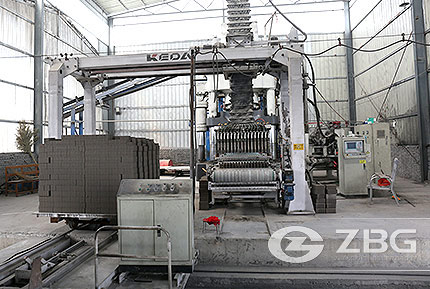
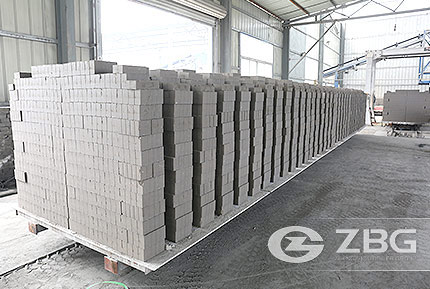
Once mixed and a properly adjusted about moisture content, the sand and lime mix is conveyed to feed the brick presses. Normally the presses are of the rotary table with an output of up to 3000 bricks per hour. As each brick is produced, they are normally stacked automatically and wait to be transferred to the hardening chambers known as Autoclaved.

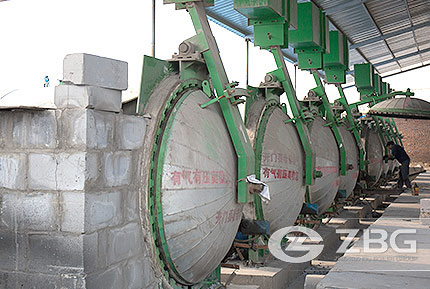
Essentially the autoclave is a large pressure cooker into which the uncured bricks are conveyed on trucks running on rails. Once the bricks are placed within the autoclave, the chamber is sealed. Steam is introduced and the pressure is steadily increased for about an hour and then maintained at pressures of 8 to 16 bars and the temperature is raised up to approximately 200 °C. After several hours, the steam is then shut off and the steam in the autoclave is released through a valve, which allows the bricks to cool down steadily. At this point the bricks are cured and have developed their final properties, especially the strength, and then they are ready for removal from the autoclave and on to packing and dispatch.Capacity:150 to 2000 m³/day
Raw materials:Sand lime,Fly Ash,Cement 

Autoclaved sand-lime brick production process consists of raw materials preparation, mixture preparation, brick molding, autoclave conservation and several major processes.

Sand-lime Brick Plant

Steam Boiler for AAC Plant

2018-09-20

AAC (Autoclaved Aerated Concrete)is 100% Green Building Material and has many advantages such as lighter quality, better heat preservation property and better sound absorption or insulation effect in comparison with common brick.

AAC Block Manufacture Process

2018-08-15

Autoclaved aerated concrete (AAC), also known as autoclaved cellular concrete, autoclaved lightweight concrete, Autoclaved Aerated Concrete (AAC) is a certified green building material and AAC blocks used for walls, floors, and roofs.

The Safety Precautions in Handling of Autoclave

2018-05-30

Industrial autoclaves are widely used in aerated concrete block, concrete pipe pile, high curing gypsum and other building materials, as well as rubber products, wood drying, preservative treatment and other production projects that require pressure steam curing.

Specification of Wood Anti-corrosion Autoclave

2018-02-01

ZBG has different specifications of wood corrosion autoclave (anti-corrosion tank), all-round, three-dimensional to meet the customer's various anti-corrosion needs.

What Factors Affect Autoclave Price

2017-11-01

Autoclave is a large and heavy weight pressure vessel. Widely used in aerated concrete block, concrete pipe piles, lime sand bricks, coal ash brick and other buildings in the autoclaved curing. Recently, a customer consulted the price of industrial autoclave.

Advantages of Autoclaved Aerated Concrete Block

2017-08-28

Autoclaved Aerated Concrete is a Lightweight, Load-bearing, High-insulating, Durable building product, which is produced in a wide range of sizes and strengths. AAC Blocks is lightweight and compare to the red bricks AAC blocks are three times lighter.

The Advantages of LNG Storage Tank

2017-07-24

The energy density is large, the vehicle continued mileage, the same volume of LNG car storage tank of natural gas is about 3 times than the CNG gas bottle. Large LNG trucks can be continuously aerated 800 ~ 1000km, very suitable for long-distance transportation needs.

Characteristics of Autoclave Aerated Concrete Products

2017-06-06

Autoclave aerated concrete (AAC) product have the advantages of light weight, good insulation properties, good sound-absorbing effect, and has a certain strength and processing advantages as a retaining structure filled with insulation material, is widely used in building, and widely accepted by all over the world , As many countries to promote and develop the preferred building materials.

Sand-lime Brick Plant

2017-05-09

Raw material preparationSand and lime is the main raw material of sand-lime brick production. The sand can be used like river sand, sea sand, Aeolian sand, dep

300000 Cubic Meter AAC Plant

2017-05-09

Capacity:300000cum AAC blocks/year Raw materials:Fly ash,Sand,Cement Fly ash AAC block is mainly composed of fly ash, cement, lime and gypsum raw material comp

Get An Instant Quotation

For all inquiries, please fill in the form below (* are required) to send us a brief message, and we will get back to you as soon as possible.


  • Heat Converters
  • Pressure Converters
  • Temperature Converters

Any question, please contact us for free. Phone number: +86-371-86167233 Whatsapp: +86 177 19888549 Email:[email protected]

KW
bar
    °C